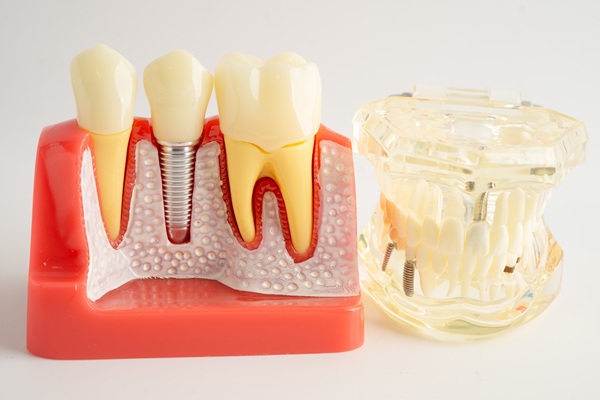
Dental implants provide a durable and natural-looking solution for missing teeth, but they do not work on their own. An implant crown serves as the final step in this process, completing the restoration and restoring smile function, appearance, and confidence. They mimic the appearance and strength of natural teeth to integrate with the rest of the smile seamlessly.
What is an implant crown?
An implant crown is a prosthetic tooth designed to replace a missing natural tooth. A general, family, or cosmetic dentist will attach it to a dental implant, which consists of a titanium post surgically placed into the jawbone. This post serves as an artificial root, providing a secure foundation for the crown. Once the implant fully integrates with the bone, the crown is affixed to complete the restoration.
Implant crowns provide several benefits:
- Natural appearance. Custom-made to match the size, shape, and color of natural teeth, ensuring a seamless blend with the smile.
- Strong and durable. Made from high-quality materials that can withstand daily chewing and biting forces.
- Stable and secure. Firmly anchored to the jawbone, eliminating the risk of slipping or shifting.
- Preserves jawbone health. Helps maintain bone density by stimulating the jaw, preventing deterioration.
- No impact on adjacent teeth. Unlike traditional bridges, implant crowns do not rely on neighboring teeth for support.
Implant crowns can improve oral function and aesthetics in smiles missing one or several teeth. During a consultation, a general, family, or cosmetic dentist can determine whether they are a lasting solution for the patient’s unique smile.
Implant crowns vs. traditional dental crowns
While both implant crowns and traditional crowns serve as restorations, they differ significantly in structure and application. Traditional crowns go over weakened or damaged natural teeth, often requiring substantial reshaping of the tooth structure. In contrast, implant crowns receive support from an artificial titanium root (the dental implant), so there is no need to alter surrounding natural teeth.
Moreover, implant crowns offer superior stability compared to traditional crowns, as they are anchored within the jawbone rather than bonded to a natural tooth. This makes for a secure fit and reduces the risk of tooth decay or structural damage to neighboring teeth, among other complications.
Placing the implant crown
Implant crown placement occurs after the dental implant has successfully integrated with the jawbone in a process known as osseointegration. This process ensures a strong foundation for final restoration (in this case, an implant crown).
The first step of placing an implant crown is to secure an abutment to the implant. This serves as the connection between the dental implant and the implant crown. Once the gums have healed around the abutment, a general, family, or cosmetic dentist takes an impression of the area to create a custom-fitted implant crown that matches the size, shape, and color of surrounding teeth. Note that a dental lab creates this custom crown.
In a couple of weeks, the patient can return to the dentist’s office to receive the implant crown. The dentist will attach it using either a screw or dental cement. A screw-retained crown allows for easier removal and maintenance if needed, while a cemented crown provides a more natural aesthetic without visible hardware. Either way, the final result is a fully restored tooth that functions and looks like a natural part of the smile.
How to care for your implant crown
A well-maintained implant crown can benefit jaw and oral health for years to come. Proper crown care starts with daily oral hygiene to maintain gum health and prevent plaque buildup. Using a soft brush and non-abrasive toothpaste can help protect the surface of the crown from unnecessary wear.
While the implant crown cannot decay, the area around it can become inflamed and infected with peri-implantitis. Regular dental checkups allow dentists to clean the surrounding teeth and gums, boosting the patient's oral health and preventing any issues from progressing. They can also monitor the dental implant and implant crown to ensure continued stability and function.
For a long-lasting implant crown, try to avoid excessively hard foods, such as ice or hard candies, as they can damage the crown. Patients should also avoid habits like biting fingernails or using teeth as tools to open packaging.
Want to learn more about implant crowns?
Implant crowns serve as a permanent solution for replacing missing teeth. They provide stability, aesthetics, and functionality unparalleled by other tooth replacements. For more information, consult our San Antonio team at All Smiles Dental Center.
Request an appointment here: https://www.allsmilesdentalcenter.com or call All Smiles Dental Center at (210) 714-7429 for an appointment in our San Antonio office.
Check out what others are saying about our dental services on Yelp: Implant Crown in San Antonio, TX.
Recent Posts
Recognizing problematic signs early and seeking an emergency dentist promptly can help prevent complications and preserve oral health. An abscessed tooth is a serious dental condition that can develop quickly and lead to severe pain, swelling, and infection. If left untreated, the infection can spread to other parts of the body and cause major health…
Wondering what you should bring along to an emergency dentist visit? Read on to learn more. If you are rushing to the emergency dentist, do not forget to bring a few important things with you. A little bit of preparation can make a big difference in the quality of care you receive once you arrive.An…
When searching for a dentist near me, families are often looking for more than just convenience. Quality, comfort, and trust can all help them select the right dental provider. Working with a trustworthy dental practice that understands your entire family's needs can make a lasting difference in your oral health.Dental health has a direct link…
Find a dentist who can help you achieve good oral health despite your busy schedule. Flexible scheduling is for individuals who need to juggle many responsibilities in life. Finding the right practice to work with you is easy if you know what to look for. Below are the features you can enjoy when you find…