How Traditional Dental Crowns and Implant Crowns Differ
A dentist can help patients restore lost teeth with traditional dental crowns or implant crowns. Tooth loss, regardless of the cause — accident or trauma, tooth decay, or gum disease — not only affects your self-esteem, but it may also contribute to major dental problems in the future.
Although both are effective for tooth restoration, there are a few key distinctions between implant crowns and traditional crowns. One option may be more suitable than the other, depending on the patient’s general oral health, including their teeth and gums. If the patient is eligible for both procedures, the choice may come down to personal taste or financial constraints.
The difference between traditional crowns and implant crowns
The following are details that patients need to know about traditional dental crowns and implant crowns so they can make an educated selection.
Traditional dental crowns
A crown is essentially a prosthetic cap that covers the natural tooth. If the goal is to restore a damaged tooth to its natural state, a crown is one of the most adaptable dental solutions. It also protects a broken, damaged, or decaying tooth from additional harm, and it is a popular aesthetic procedure for “whitening” a stained or discolored tooth.
Traditional crowns are often recommended for the following situations: to repair a severely decayed tooth, to protect a tooth after a root canal procedure, to shield a worn-down or broken tooth from additional damage, and to alter the shape, color, or size of a natural tooth.
Implant crowns
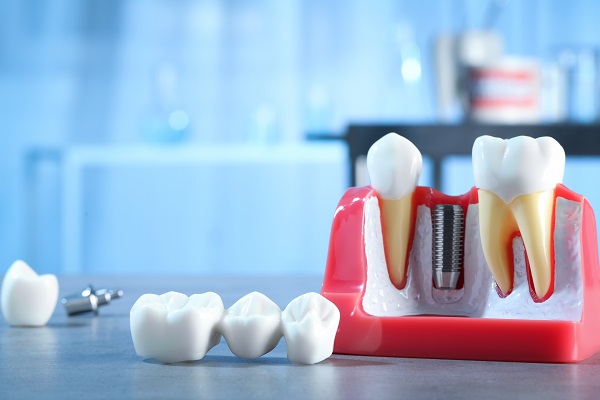
Unlike a traditional dental crown, which covers a tooth with a root structure, a dental implant crown replaces a lost tooth and its roots. An abutment is affixed to a dental implant embedded inside the jawbone, beneath the gum line.
Dental implant crowns are quite sturdy and may last a long time, but they still need maintenance, such as the gums surrounding the implant being clean at all times. Although the implant contains an artificial root system and tooth, an infection can still develop, which may necessitate the removal of the implant.
A fundamental distinction between a traditional crown and an implant crown is that implants do not harm or compromise the structure of healthy teeth. However, not everyone is a good candidate for dental implants. Certain chronic illnesses, such as diabetes, and habits like smoking can adversely affect healing after the implant procedure.
The process of getting a dental crown
The dental crown placement often requires two appointments, though some dental offices have the facilities to produce a dental crown on the same day. During the first appointment, the dentist will check and prepare the tooth that needs the dental crown. The dentist may also recommend X-rays of the tooth and surrounding bone. A root canal operation may be necessary before the dental crown procedure if there is extensive tooth decay, infection risk, or damage to the tooth pulp.
To create space for the crown, the dentist will file down the tooth on both sides and the top. An all-metal dental crown is thinner than a porcelain or porcelain-fused-to-metal crown and needs less tooth removal. A filling substance may be utilized to “build up” enough tooth structure for the crown if part of the tooth is lost to decay or injury.
After reshaping the tooth, the dentist will take an imprint. They will also take impressions of the teeth on either side of the tooth receiving the crown. This process also occurs during the implant crown procedure and helps ensure that the new crown fits into the bite.
A dental laboratory then processes the imprints. It can take two to three weeks for the lab to produce the crown and return it to the dentist. The dentist will install a temporary crown during the initial appointment to safeguard the prepped tooth or abutment while the permanent crown is in production.
The final crown is attached to the tooth during the second appointment. The dentist will remove the temporary crown and examine the fit and color of the new dental crown. If everything looks okay, they will attach the crown permanently.
Choosing between traditional and implant crowns
The dentist will examine the patient thoroughly during their initial consultation and determine which of the two treatments is best for them. It is worth examining the advantages and disadvantages of both. In general, traditional dental crowns are ideal when the natural tooth is structurally impaired but is still in the jaw. Implant crowns are best when it is impossible to save the damaged tooth with a traditional crown.
Request an appointment here: https://www.allsmilesdentalcenter.com or call All Smiles Dental Center at 2107147429 for an appointment in our San Antonio office.
Check out what others are saying about our dental services on Yelp: Implant Crowns in San Antonio, TX.
Recent Posts
An implant dentist replaces missing teeth with durable, natural-looking dental implants. This advanced restorative treatment helps patients regain confidence in their smiles while improving oral function and long-term dental health. Whether replacing a single tooth or restoring multiple missing teeth, an implant dentist provides customized solutions to achieve a strong, stable, and aesthetically pleasing result.Dental…
Dental implants restore a smile no matter how many teeth are missing. Along with plentiful benefits, they also require minimal lifestyle changes. However, an implant dentist can guide patients in promoting the longevity of implants so that they remain a practical and reliable tooth replacement option.Dental implants represent an improvement in quality of life rather…
An implant dentist provides specialized expertise to restore oral function and promote long-term dental health after dental implants become compromised. Everyone deserves a full, healthy smile, which is why understanding the importance of prompt, professional care is essential when implants sustain damage. Delaying treatment can lead to further complications, including infection and bone loss. Here…
When tooth loss occurs, simple tasks such as chewing and speaking may be difficult, and the appearance of a smile can be affected. An implant dentist uses dental implants to address these issues, as the restorations integrate directly with the jawbone, creating a long-lasting foundation for replacement teeth. The process not only restores the look…