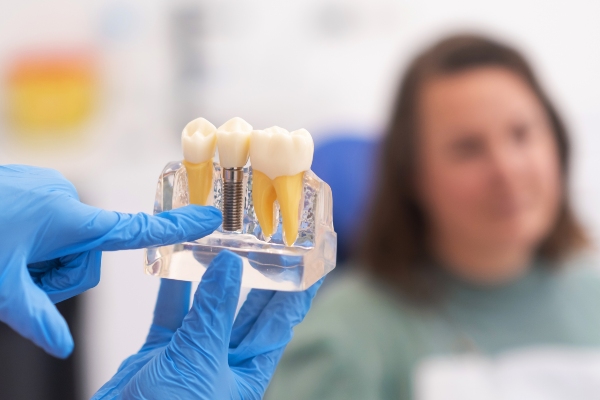
For patients who have been suffering from a damaged or infected tooth, finally getting the tooth extracted can feel like a relief. However, bleeding after a can be worrisome and inconvenient. Before a patient undergoes a tooth extraction, it can be helpful to know what to expect in terms of bleeding.
When bleeding typically stops after extraction
After a tooth is extracted, a dentist or oral surgeon gives the patient gauze to gently bite down on. The gauze helps to absorb blood, and the pressure encourages a blood clot to form. Usually, the patient can take out the gauze three to four hours after the tooth extraction. By this point, a clot should have formed, stopping almost all bleeding.
Some patients become concerned after seeing what looks like a large amount of blood immediately after the extraction. However, blood mixed with saliva often makes it look like the extraction site is bleeding much more than it actually is.
In some cases, residual bleeding may continue up to 24 hours after the extraction. Seeing a small amount of blood periodically appear is normal. If excessive bleeding continues, a patient should reach out to the dentist as soon as possible.
Tips to prevent bleeding from reoccurring
Once a blood clot has formed at the site of a tooth extraction, bleeding stops and the mouth can begin to heal. However, if the blood clot becomes dislodged, it may lead to both excessive bleeding and a painful condition called dry socket. In the days following a tooth extraction, patients should take several precautions.
Avoid drinking through straws
The suction caused by drinking through a straw can often be enough to remove a blood clot. Patients should avoid drinking through straws for a full week after an extraction.
Do not smoke or use tobacco
Smoking can also dislodge a newly formed blood clot. In fact, smoking is one of the most significant risk factors for developing dry socket: A 2011 study published in The Open Dentistry Journal found that 12% of patients who smoked developed dry socket after an extraction (compared to only 4% of non-smokers). Patients should also avoid smokeless tobacco, as certain chemicals found in tobacco products can delay healing.
Check out what others are saying about our dental services on Yelp: .
Maintain proper oral hygiene
In some cases, bacterial buildup can cause the blood clot to break down. Patients should make sure to keep their mouths clean after a tooth extraction. Some dentists and oral surgeons will prescribe a medicated mouthwash to use for a day or so. Usually, gentle brushing is safe, but a patient's dentist may have specific instructions depending on the type of extraction.
Eat soft foods
The extraction site is likely to be painful for a few days. Soft foods are often easy to eat. However, patients should avoid soup, as sucking on the broth may pull out the blood clot. Crunchy or sticky foods should also be avoided, as they may become stuck in the extraction site.
Conclusion
A tooth extraction can be daunting, but by knowing what to expect, a patient can be prepared for a smooth recovery. Dentists and oral surgeons can talk patients through what they need to do to stop bleeding as soon as possible.
or call All Smiles Dental Center at 210-714-7429 for an appointment in our San Antonio office.
Recent Posts
A tooth extraction can improve your dental health. The dentist can assess the tooth and see if it is still repairable. If not, then the dentist will remove it. Knowing more about tooth removal can help you prepare for the procedure. Here are some tooth extraction questions you can ask your general dentist on consultation…
A general dentist will typically only recommend pulling a tooth when absolutely necessary. This procedure, also known as tooth extraction, is reserved for teeth that have been decayed or damaged beyond repair. Not only does this prevent a problem tooth from starting a domino effect of oral health issues, but it also brings several other…
Worried about tooth extractions? Read on to learn more about this procedure and its aftermath. A tooth extraction is sometimes necessary for oral health but it can change your smile significantly. Beyond the immediate relief from pain or infection, the absence of a tooth leads to new considerations regarding dental aesthetics and function. If a…