A Dentist Explains 3 Dental Restoration Procedures

If you have cavities or are experiencing fractured or missing teeth, you understand the need for dental restorations. However, it is more than just the appearance of your smile that is at stake if you do not treat these issues. Tooth damage can cause serious problems down the road if it is not remedied in a timely manner.
A tooth that is cracked or chipped can be very painful, and the pain may persist depending on the extent of the damage. Exposed soft tissues or nerves may be to blame for this. A break in tooth enamel is also problematic because bacteria can now easily penetrate the tooth, increasing the risks of serious tooth decay. Because the decay can progress at a much faster rate, it may require more extensive dental work if the treatment is delayed. This can also increase the risks of infection and tooth loss.
A missing permanent tooth should always be taken seriously, even if it is towards the back of the mouth and is not noticeable to others. Lost teeth can lead to severe damage to surrounding teeth as a result of excess pressure and biting force. Jaw pain can also occur, along with alignment issues, digestive problems, and even trouble with speech. Missing teeth often affect the oral health of the entire mouth if not corrected as soon as possible.
Fortunately, there are a wide variety of restoration options available, with the one that is right for you depending on what type of dental issues you are experiencing. Your dentist can walk you through the types of procedures and help you determine which one will fit your needs.
Types of dental restoration procedures
There are many restoration options for patients who need to repair or replace decayed, broken, or missing natural teeth. There are many factors to consider, from recovery time and follow-up care to the materials and tooth structure needed. These common options are used in many situations where tooth damage or loss is an issue.
1. Dental fillings
Dental fillings are perhaps the most common type of restoration procedure that a dentist does. When a patient's tooth has a cavity, bacteria create a hole that leads to pain. Over time, that hole can become a much larger problem. Luckily, a dentist can stop the problem in its tracks by providing a filling for the patient. The filling, which can be made of gold, silver, or a composite resin that matches the tooth's natural color, fills in the cavity in the tooth. The patient feels less pain and can go back to eating and drinking normally.
2. Dental Crowns
Sometimes, a patient has more fractured or missing teeth than fillings can help with. In these cases, a dentist may recommend that the patient consider dental crowns. These common dental restorations act as caps over teeth and are ideal for teeth that have experienced extensive damage and decay. Dental crowns are created using durable materials, such as porcelain, porcelain-fused-to-metal, and zirconia, providing a durable solution for protecting damaged decay. They are created in a dental laboratory and can take a couple of weeks to complete. However, some dentists offer same-day options to reduce the waiting time.
3. Dental implants
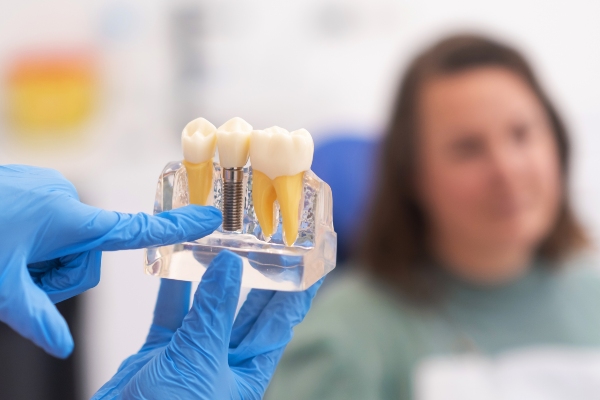
Some patients who need many or all of their teeth to be replaced do not want to use traditional replacement options. Depending on their dental needs, these patients may be good candidates for dental implants. Implants are titanium rods that are inserted into the gums. Then, an abutment is attached to the rod to hold the false teeth in place. These teeth are known as crowns. Receiving dental implants can be a fairly lengthy process, but when it is complete, the patient has a full set of permanent teeth. They should remain intact and healthy as long as the person brushes and flosses daily as well as sees the dentist regularly.
Choosing the right restoration
Choosing the right restoration option depends on several factors. First, your dentist determines whether you have minor or major dental health issues and how they should be addressed. If you only need a couple of fillings, then you can typically receive them the same day. If your dentist decides that you need to repair or replace one or more missing teeth, you need to decide between a dental crown or dental implants; in some cases, dentists offer an implant crown for a single missing tooth. In other situations, the dentist may recommend an implant-supported bridge for those missing multiple teeth in a single arch. Common deciding factors include the health of your jawbone and how many teeth you need to have replaced.
Conclusion
Do not let yourself go through life with the pain and embarrassment of broken or missing teeth. Talk to your dentist to see what your options are for dental restorations.
Request an appointment here: https://www.allsmilesdentalcenter.com or call All Smiles Dental Center at (210) 714-7429 for an appointment in our San Antonio office.
Check out what others are saying about our dental services on Yelp: Dental Restorations in San Antonio, TX.
Recent Posts
A broken tooth is a common dental issue that can happen for many reasons, such as accidents, biting into something hard, or untreated tooth decay. Whether a dentist can save a broken tooth or needs to remove it depends on how severe the damage is and how quickly patients seek treatment. While modern dental techniques…
A broken tooth might not seem like a big deal if it is only a minor break, but it still requires treatment. This is because broken teeth cause more damage than simply ruining the appearance of a person’s smile. The damage typically removes portions of the outer surface of teeth, called enamel, which protects the…
Any dental work that is done to repair missing or damaged teeth are types of dental restorations, which can include anything from minor fillings to full implants. How long these restorations take depends entirely on what kind of work is necessary. Some procedures can be performed in a single short appointment, while others might be…
Unlike general dentistry, which focuses on routine examinations and treatment, restorative dentistry is a specialization focusing on the repair or replacement of damaged or missing teeth. Bruxism is a fairly common condition that causes the clenching and grinding of teeth. While no single cause exists for bruxism, the results of teeth grinding are well documented.…